
If you’re over 50 and thinking about improving your vision, you’ll likely come across two main procedures: LASIK and lens replacement surgery. Both can help reduce your dependence on glasses, but they provide different visual results.
Here, we answer some of the most common questions we get asked at iLase, including for whom lens replacement is recommended, how the costs of Lasik vs lens replacement compare, and which option might be best for you.
How Your Vision Changes in Your 50s
From around your mid-40s onwards, almost everyone starts to feel the effects of presbyopia – the stiffening of the natural lens that makes reading or focusing up close harder. By your 50s, this is completely normal and happens even to people who’ve never worn glasses in their life. Only people who are naturally near-sighted with myopia are able to read without glasses at this age and onwards. But they require glasses to see clearly beyond reading distance.
This is also the stage where early cataract changes can begin. They often don’t cause major symptoms at first, but they’re a natural part of ageing and will progress over time.
Because LASIK reshapes the cornea (the front window of the eye) but does not treat the lens, these age-related changes play a big role when comparing LASIK vs lens replacement for people over 50.
LASIK: What It Can, and Can’t Do in Your 50s
LASIK is a brilliant procedure for many people, especially those in their 20s, 30s and early to mid 40s. It can correct short-sightedness, long-sightedness and astigmatism quickly and safely.
But for people in their 50s and beyond, LASIK becomes a less ideal option for a few reasons:
1. LASIK doesn’t fix presbyopia
LASIK won’t restore clear near vision. Monovision LASIK (where one eye is set for distance, the other for near) is an option, but not everyone adapts comfortably to it and it can cause a reduction in depth perception. Also, as presbyopia develops over many years (it does not suddenly happen like an on-off switch), LASIK monovision may need to be repeated in the “near eye” to provide additional near vision.
2. LASIK doesn’t prevent cataracts
Because LASIK doesn’t treat the natural lens, cataracts will still develop, meaning you will need cataract surgery later on. Not only is this another surgery, but the visual and glasses-free results are less accurate than eyes that have not previously had LASIK. This is because the corneal curvature is one of the most important measurements used in calculating the lens implant required to produce excellent vision without glasses after cataract surgery. These calculations are inherently less accurate for eyes in which the shape of the cornea has been changed, such as occurs during LASIK, and such patients are more likely to need glasses after cataract surgery. Some of these patients will request further surgery to refine the result of cataract surgery, and reduce their need for glasses.
3. Fewer people are suitable
Dry eyes and early lens changes can all reduce LASIK suitability for people in their 50s.
So, while LASIK remains an excellent procedure for the right patient at the right age and with appropriate expectations, many people over 50 would only get a limited or short-term benefit with clear distance vision but will still need glasses to read.
Lens Replacement Surgery: A Long-Lasting Option for 50+
Lens replacement surgery is often the preferred choice for people in their 50s and 60s who want a comprehensive and long-lasting improvement in their vision.
Instead of reshaping the cornea, it replaces the eye’s natural lens with a clear, artificial lens designed to give stable vision for life.
Why many patients choose lens replacement:
1. It improves both distance and reading vision
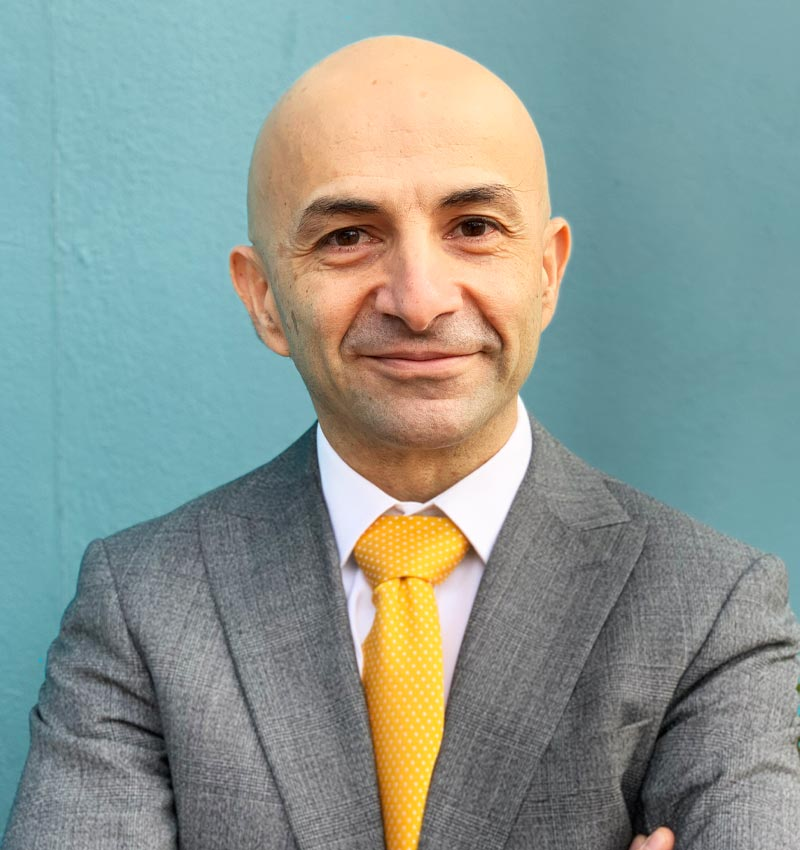
The premium lenses used by Prof Mohammed Muhtaseb in lens replacement surgery can help significantly reduce your need for glasses, and in some cases provide a totally glasses-free result. This depends on whether an individual needs to see very small print, read in dimly lit environments and so on.
2. It prevents cataracts in the future
Lens replacement surgery replaces your natural lens and this prevents cataracts forming in the future – a major advantage over LASIK.
3. The results don’t change with age
With lens replacement surgery the new lens doesn’t age or become cloudy, so the vision improvement stays stable. Of course, unrelated eye conditions can develop in some people over their lifetime and some of these may affect vision.
4. You don’t need to meet LASIK’s suitability requirements
Even people with high prescriptions, dry eyes, or early cataracts are suitable candidates for lens replacement surgery, unlike LASIK. Dry eye may need to be treated before surgery is performed.
For many patients comparing lens replacement surgery vs LASIK, this longer-term stability is what makes lens replacement the better option after 50.
Who Is Lens Replacement Best For?
You might be a good candidate for lens replacement surgery if:
✔ You’re over 50 and notice you need reading glasses more often. Also, if you are near-sighted, you can read well without glasses, but cannot see clearly further away than reading distance.
✔ You want clearer distance and close vision
✔ You have signs of early cataracts
✔ LASIK isn’t suitable or won’t give you the long-term result you want
✔ You previously had LASIK but now struggle with near vision
And yes, you can have lens replacement after LASIK, as long as the eye is otherwise healthy. Many patients choose this route once presbyopia or early cataracts start to affect their vision again.
LASIK vs Lens Replacement Costs
We understand that comparing lens replacement surgery vs Lasik costs is a key part of the decision-making process.
LASIK in Wales typically costs:
• Around £1,750–£2,200 per eye (based on local competitors)
Lens Replacement at iLase:
• From £3,189 per eye with Prof Mohammed Muhtaseb
Lens replacement costs more, but it often provides better long-term value, especially for people over 50, because:
- You won’t develop cataracts later
• It can address both near and distance vision at the same time, depending on the lens selected
• It avoids the need for further procedures down the line
For many patients, this long-term clarity makes lens replacement a worthwhile investment.
What Our Patients Say
Lens replacement has one of the highest satisfaction rates in vision correction, especially among people who want to enjoy life without constantly switching between different glasses.
Martin Harris, one of our patients, recently shared:
“No. 1 – My advice would be do it. No. 2 – See Mohammed if you can. I made the decision to not go down the NHS route because I wanted to see the best consultant – probably in the UK… It was absolutely worth it… because you can’t really put a price on your sight.”
Feedback like this is incredibly common and reflects how transformative lens replacement surgery can be for everyday life.
So, Lens Replacement Surgery vs Lasik? Which Should You Choose?
If you’re over 50 and noticing changes in your vision – particularly with reading or early cataracts, lens replacement becomes the most effective and future-proof choice.
It’s the option that offers long-term clarity, protects you from cataracts and reduces the chances of needing further procedures later.
When comparing lens replacement surgery vs LASIK, the real question to ask is:
“Which treatment gives me the best vision not just today, but for years to come?”
For most people over 50, lens replacement is the answer.
Here to Help
If you’re unsure which option is right for you, Professor Muhtaseb is here to help. With extensive experience in lens replacement surgery, he’ll assess your vision, explain your options clearly and recommend the treatment that fits your lifestyle and long-term needs.
To book a consultation or ask a question, please get in touch. We’re always happy to help.