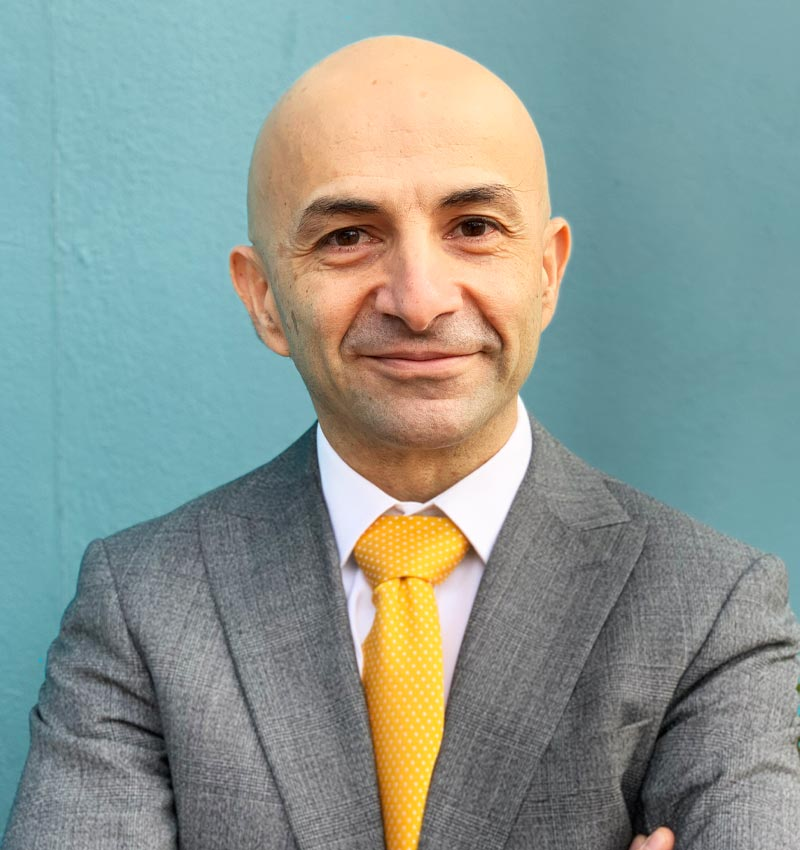
PROF MOHAMMED MUHTASEB SPEAKS ABOUT THE REFRACTIVE CATARACT SURGERY RISKS
What are refractive cataract surgery risks?
The question regarding risks is very important, and any surgical procedure carries with it a degree of risk.
Cataract surgery is amongst the most successful of surgical procedures, and the vast majority of patients have no issues at all after the surgery.
There is a small risk associated with cataract surgery and refractive lens exchange. The quoted figures indicate a 1 – 2% chance of something unexpected or unwanted happening during or after the surgery. I explain those in detail at the consultation.
Some patients will have specific risks that are relevant to their distinct scenario. These risks are often identified during the examination. They typically involve the cornea or previous ophthalmic history; for example, the patient may have had other medical conditions of the eye in the past, or had surgical procedures to the eye. This includes LASIK, for example, where the lens calculations need to be a little bit more specific…

Unfortunately, most people only find this out after having cataract surgery. The information in this Wales Cataract Guide could save you frustration and worry. Simply click the button below to give us your email and we’ll send you this life changing guide.
People sometimes say that they don’t recognise people on the streets. Someone will wave to them, and they don’t recognise them, they walk past, and their friends will say, “Oh, why did you ignore me?” or, “Didn’t you see me yesterday on the High Street?”
There’s a general clouding and fogging of the vision, dazzle and halo effect. People also say that their close vision is affected. They find it more difficult to read. The letters can start to get jumbled up and cloudy, or they can get shadows and ghosts next to objects. Things like watching TV also become difficult.
People say that the quality of the television screen isn’t good and that the subtitles or the little headlines on the news channels, as they roll along the bottom of the screen, aren’t so clear. These are the typical symptoms that people describe.
People sometimes describe more specific symptoms according to their activities or hobbies or leisure interests.
You might say that someone who enjoys golf, either can’t quite see where the ball is to tee off, or when they tee, they can’t see where the ball has travelled or where it’s landed. Other people might describe difficulty with other hobbies.
I get quite a lot of patients who enjoy walking in the countryside; rambling, and some people enjoy the water facilities in South Wales such as sailing. They will say that they can’t quite read the maps if they’re rambling or orienteering, or the dials on their boats. Some symptoms can be quite specific. They’re not able to function as independently and as fully as they used to.
The other thing that people who’ve got cataracts, tell me, is that they feel more dependent on other people. They feel that they’re less able to undertake their normal daily activities and tasks. Even simple things such as driving, or being borderline on the driving standard, or losing confidence in crossing the road or walking up and down steps. Therefore, people generally feel quite restricted in their life and maybe feel as though physically, they can’t do what they need to do. Visually, they’re impacted and lose some of the confidence or the visual ability to perform those functions. So life generally becomes a little bit less fun; a little bit less enjoyable.
When people are less able to perform their hobbies – for example, people that do arts and craftwork – life becomes a little bit less fun and a little bit less enjoyable. That makes the results of the surgery much more rewarding for the patients – and me – when we restore their vision.
I invite you to book a consultation to determine your suitability for refractive cataract surgery or refractive lens exchange. It’s the only way to determine your suitability for these procedures and to have an in-depth discussion regarding the risks and benefits of each of them. I look forward to seeing you there and taking you through the journey to achieving your desired postoperative outcome.