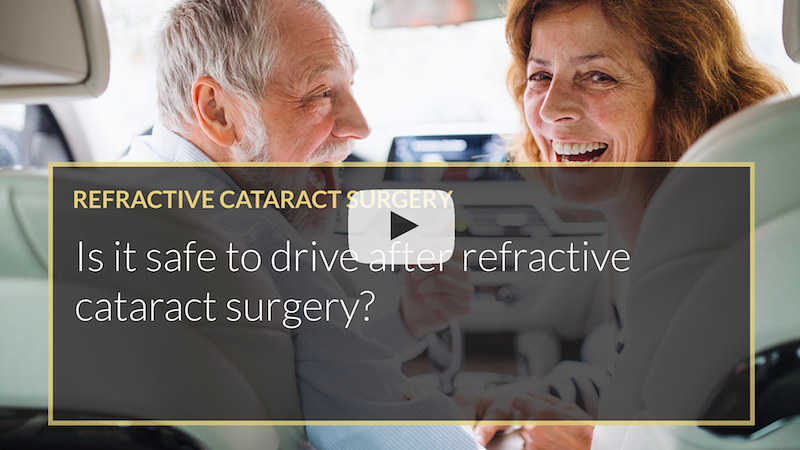
IN THIS VIDEO PROF MOHAMMED MUHTASEB DISCUSSES DRIVING AFTER CATARACT SURGERY
Is it safe to drive after refractive cataract surgery?
It’s perfectly safe to drive after refractive cataract surgery and refractive lens exchange surgery. As long as the patient can meet the legal requirements for the driving standard, then it’s completely safe to drive. In fact, one of the most common reasons patients come to see me is that they have been told by their optometrist that their vision is borderline for meeting the driving standard or has fallen below the driving standard.
They don’t notice that their vision has suddenly crashed or deteriorated. It comes as a real shock or surprise to some patients when the optometrist, at a routine test even, will tell them either they’re borderline for driving or that they fall below the standards and shouldn’t drive anymore…

Discover the number one mistake patients make when choosing cataract surgery
Most people have cataract surgery without knowing about all the options they actually have surrounding cataract surgery. Unfortunately, most people only find this out after having cataract surgery. The information in this Wales Cataract Guide could save you frustration and worry. Simply click the button below to give us your email and we’ll send you this life changing guide:
It’s very distressing for these patients. Many patients are the sole driver in the household. They need to drive to take a partner or parent or spouse to hospital appointments. For some, it’s just simply maintaining their independence. We’re in South Wales, so some people live in the countryside and need to get in and out to get daily provisions.
It’s a very common reason patients come for refractive cataract surgery.
It’s one of the biggest joys for patients after the surgery has been completed that they’re back to driving and they’re back to being independent. They feel like they have their life back again.
I invite you to book a consultation to determine your suitability for refractive cataract surgery or refractive lens exchange. It’s the only way to determine your suitability for these procedures and to have an in-depth discussion regarding the risks and benefits of each of them. I look forward to seeing you there and taking you through the journey to achieving your desired postoperative outcome.
Frequently Asked Questions:
Do I need to tell the DVLA about cataract surgery?
If you had cataract surgery (or have cataracts) in only one eye and your other eye still meets the vision standard and your field of vision is adequate, then you generally do not need to notify DVLA. Unless your vision remains below the legal standard after recovery. For example you cannot read a number-plate at 20 metres in daylight.
Can I drive the day after surgery?
Most people can drive again after their post-operative check, usually 1–3 days after surgery, if their vision meets the legal standard. During your postoperative appointment, your consultant will be able to check your vision and let you know when you can start driving again.
Is it safe to drive at night after surgery?
You may experience temporary glare or halos. Wait until these subside before driving in dark conditions.
Share This Story, Choose Your Platform!
ABOUT THE EXPERT
Prof Mohammed Muhtaseb, FRCOphth
Consultant Cornea, Cataract and Refractive Surgeon
iLase is the private practice of Consultant Ophthalmic Surgeon, Prof Mohammed Muhtaseb. Based in South Wales, he is one of the very few ophthalmologists working in the UK who is a fellowship-trained specialist in Cornea, Cataract and Refractive Surgery. He holds full specialist registration with the General Medical Council and was appointed as a Consultant in the NHS in 2006.